You’ve spent months scouring listings, attending open houses, and finally, your offer has been accepted. It’s an exhilarating moment, but as the excitement settles, a looming question remains: How much is this actually going to cost me on closing day?
Many buyers, particularly those entering the market for the first time, focus almost exclusively on the down payment and the monthly mortgage payment. However, failing to account for closing costs in Canada is one of the most common reasons buyers feel financially strained or, in worst-case scenarios, unable to finalize their deal.
Mortgage closing costs in Canada can add thousands of dollars to your purchase price. Understanding these additional fees is essential to avoid surprises, plan your budget accurately, and ensure your home-buying journey ends with a celebration, not a crisis.
Before you sign on the dotted line, connect with a mortgage broker near you to get a personalized estimate of your total costs.
What Are Closing Costs?
In simple terms, closing costs are a variety of fees and expenses that must be paid at the final stage of a real estate transaction. These are the costs associated with legally transferring the property from the seller to you, as well as the administrative costs required by your lender and the government.
In Canada, you should typically budget between 1.5% and 4% of the home’s purchase price for closing costs. For a $600,000 home, that means you need to have between $9,000 and $24,000 in liquid cash available on top of your down payment. These costs vary significantly depending on your province, the municipality, and the type of property you are purchasing.
Properly understanding the mortgage approval process is the first step in recognizing where these fees fit into your overall financial timeline.
Breakdown of Common Closing Costs in Canada
When calculating how much the closing costs are in Canada, it helps to look at the specific line items that make up the total. Here is a real estate closing costs breakdown for Canadian buyers.
1. Land Transfer Tax (LTT)
This is often the single largest “hidden” cost. Most provinces charge a tax when a property changes hands. The amount is usually a percentage of the purchase price, calculated on a sliding scale.
- The Double Whammy: If you are buying in Toronto, you must pay both the Ontario Provincial Land Transfer Tax and a Municipal Land Transfer Tax.
- The Silver Lining: Many provinces offer rebates for first-time buyers. Exploring essential first-time buyer programs in Canada can help you determine if you are eligible to offset this cost.
2. Legal Fees and Disbursements
You cannot buy a home in Canada without a lawyer or notary. They are responsible for reviewing the purchase agreement, conducting a title search, and facilitating the transfer of funds.
- Legal Fees: The cost for the lawyer’s time.
- Disbursements: Out-of-pocket expenses the lawyer incurs on your behalf, such as registration fees and couriers. Expect to pay between $1,000 and $2,500.
3. Home Inspection Fees
While optional, a home inspection is highly recommended. For $400 to $800, a professional will evaluate the home’s structure, roofing, plumbing, and electrical systems. This allows you to identify potential “money pits” before the deal is finalized.
4. Property Appraisal Fees
Your lender wants to ensure the property is actually worth the price you are paying. They will often require a professional appraisal. While this protects the lender, the cost (usually $300 to $500) is typically passed on to the buyer.
5. Title Insurance
Most lenders require title insurance to protect against losses associated with title fraud, municipal work orders, or survey errors. It is a one-time fee paid at closing, usually ranging from $250 to $500.
6. Mortgage Insurance (CMHC Premium)
If your down payment is less than 20%, you are required to have mortgage default insurance. While this is often rolled into your mortgage principal, the PST/HST on the premium must be paid upfront at closing in some provinces (like Ontario and Quebec). Check out our mortgage insurance options in Canada for more details.
7. Adjustments and Prepaid Costs
If the seller has already paid the property taxes or utility bills for the remainder of the year, you will need to reimburse them for the portion of the year you will own the home. These “adjustments” are calculated by your lawyer and added to your closing totals.
Additional Fees Buyers Often Overlook
The home-buying fees in Canada don’t stop at the lawyer’s office. There are several hidden costs of buying a home in Canada that occur immediately after you get the keys:
- Moving Costs: Whether you hire professionals or rent a truck and buy pizza for friends, budget at least $500-$2,000.
- Immediate Maintenance and Renovations: From changing locks to painting or urgent repairs found during the inspection.
- Utility Setup: Some utility companies charge a “connection fee” or require a security deposit for new accounts.
- Condo Estoppel Certificate: If buying a condo, you may need to pay ($100–$200) for a certificate that confirms the status of the unit’s reserve fund and fees.
Factoring these in is a vital part of budgeting for your first mortgage payment and ensuring you aren’t “house poor” in month one.
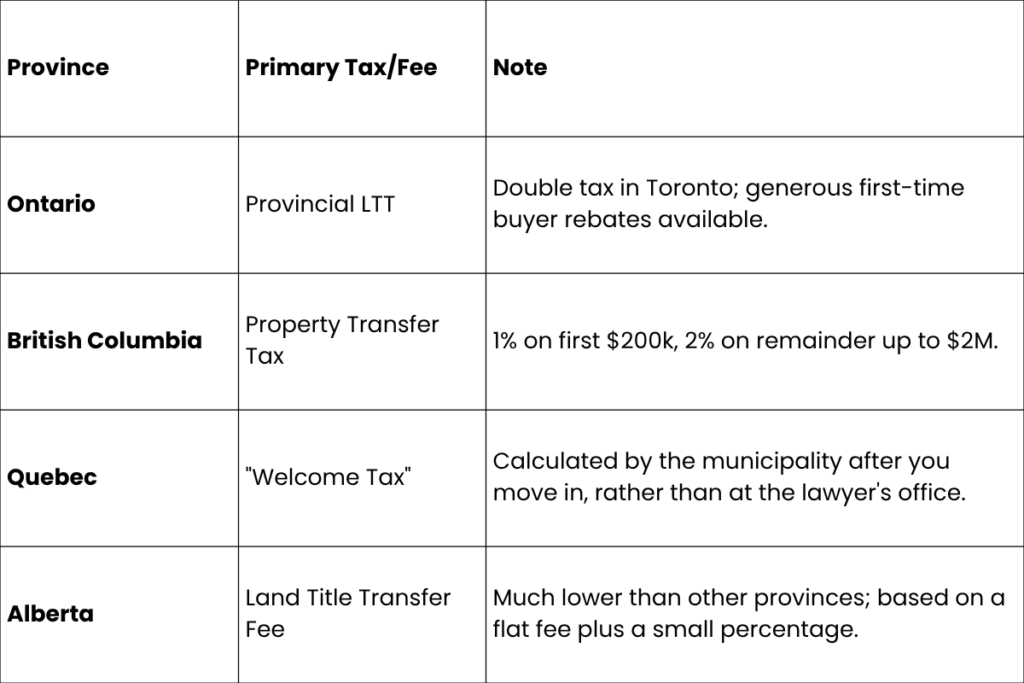
Closing Costs by Province: What Changes Across Canada?
The additional costs when buying a home in Canada vary widely depending on where you live. Here is a quick snapshot:
How to Estimate Your Closing Costs
The best way to avoid a shortfall is to use a mortgage comparison guide for choosing the best option and to consult with a professional.
A good rule of thumb is to set aside 3% of the purchase price in a separate savings account. If your home is $500,000, keep $15,000 ready. If you don’t use it all, you have a head start on your emergency fund or furniture budget.
How to Reduce Your Closing Costs
While many of these fees are non-negotiable, there are ways to minimize the impact:
- Rebates: Always check for federal and provincial first-time buyer rebates.
- Shop Around: You can compare quotes from different home inspectors and real estate lawyers.
- Negotiate the Appraisal: Sometimes, lenders will waive the appraisal fee as an incentive to get your business.
- Choose the Right Product: Selecting a mortgage with the right terms can save you more in the long run than a slightly lower closing fee.
Common Mistakes Buyers Make During Closing a Mortgage
Even seasoned investors can slip up. Here are the common mortgage mistakes regarding closing:
- Relying Only on Down Payment Estimates: Assuming the down payment is the only cash needed.
- Not Confirming the PST on Mortgage Insurance: In provinces like Ontario, this must be paid in cash at closing.
- Forgetting the “Adjustments”: Being surprised when the lawyer asks for an extra $1,200 for prepaid property taxes.
When Do You Pay Closing Costs?
Most mortgage closing costs in Canada are due on the actual closing day (the day you get the keys). You will typically meet with your lawyer a few days prior to providing a bank draft for the total amount. However, some costs, like the home inspection and appraisal, are paid at the time the service is rendered, much earlier in the mortgage journey.
How Mortgage Intelligence Helps You Navigate Closing Costs
Navigating closing costs for first-time buyers in Canada doesn’t have to be a solo mission. At Mortgage Intelligence, we provide:
- Accurate Cost Breakdowns: We help you look past the interest rate to see the “all-in” cost.
- Personalized Planning: We align your mortgage strategy with your current savings.
- Stress-Free Closing: We coordinate with your lawyer and lender to ensure every penny is accounted for.
Whether you are looking for a mortgage pre-approval or exploring first-time home buyer mortgage solutions, we make sure there are no surprises on moving day. Understanding your budget and home affordability is important.
Closing costs are an unavoidable part of the Canadian real estate landscape. However, by understanding the real estate closing costs breakdown in Canada, you transform a potential financial crisis into a well-managed step in your home-ownership journey.
Don’t let hidden fees stand between you and your dream home. Be proactive, budget early, and lean on expert advice.
Talk to a Mortgage Intelligence expert today for a full breakdown of your expected costs and a mortgage plan tailored to your life.
FAQs
How much are closing costs in Canada?
Generally, you should budget between 1.5% and 4% of the home’s purchase price.
What is included in closing costs?
Key items include land transfer tax, legal fees, title insurance, home inspection fees, and property tax adjustments.
Do first-time buyers pay less in closing costs?
Often, yes. Many provinces and cities offer land transfer tax rebates specifically for first-time buyers.
Can closing costs be added to a mortgage?
Most closing costs must be paid in cash. However, the mortgage insurance premium (CMHC) is typically added to the loan balance, though the tax on that premium must be paid up front.
When do you pay closing costs?
Most are paid on closing day through your lawyer, but inspections and appraisals are paid when they occur during the buying process.
Are closing costs negotiable in Canada?
Some are, such as legal fees and home inspection rates. Government taxes and registration fees are fixed and non-negotiable.